
Air Hockey Tables in India: A Home Game-Room Buying Guide
Air hockey lives or dies on airflow and surface quality. Here is how to tell a table that will still play well in year three from one that will not, and what each price band buys in India.
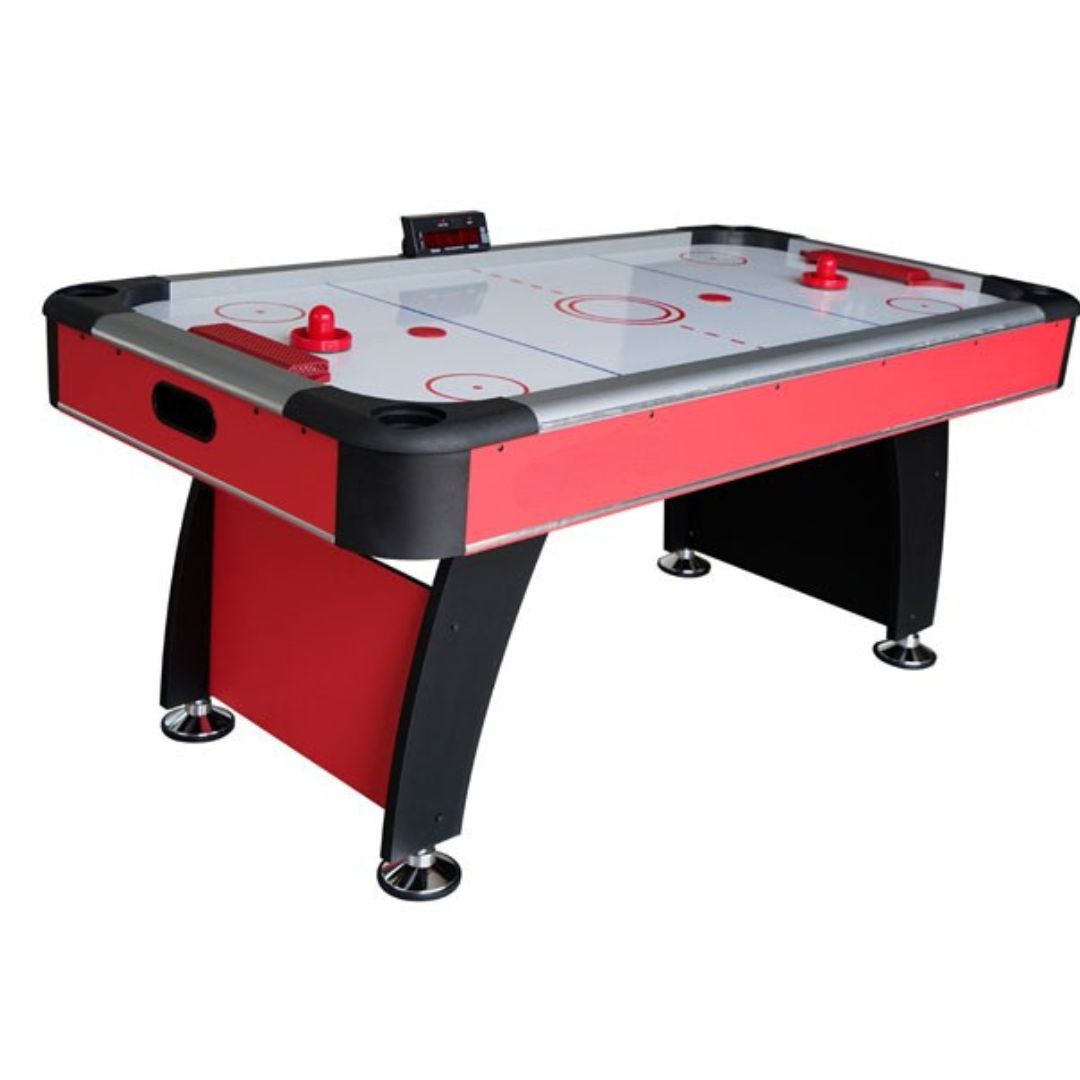
Air hockey tables in India: what separates a good table from a bad one
Air hockey is one of the few game-room purchases where the difference between a good and a bad table is obvious within thirty seconds of play. Either the puck floats and glides, or it drags, catches and stalls in the corners. Almost everything else — scoring displays, graphics, cup holders — is decoration around that single question.
Here is what to check before you buy one for an Indian home, and what each price band realistically delivers.
1. Airflow is the whole product
An air hockey table works by pushing air through hundreds of small holes to create a cushion under the puck. Two things go wrong on cheap tables: the blower is underpowered, so the puck never fully floats; or airflow is uneven, so the puck glides in the middle and dies near the goals.
You cannot judge this from a specification sheet, because most listings do not publish blower ratings. Two proxies work: price and weight. Tables that can support a strong blower are built more solidly overall. If a full-size table is unusually light and unusually cheap, the blower is where the money was saved.
Keep the holes clean
In Indian homes, dust is the practical enemy. Blocked holes reduce airflow gradually, so the table gets worse without any single moment where it breaks. Wipe the surface regularly and run the blower for a minute before play to clear the holes.
2. The playing surface
You want a smooth, hard laminate that stays flat. Warping is the second most common long-term failure, and humidity accelerates it — which matters if the table lives on a balcony, in a garage or in a room that is closed up during the monsoon. A table with a thicker, better-supported bed resists this; a thin bed on a light frame does not.
Check the rails too. Puck rebound off the side rails is a big part of how the game plays, and soft or loosely fitted rails produce dead, unpredictable bounces.
3. Size, and the room space nobody measures
Air hockey is played standing and moving. Measure the table footprint, then add 60-75 cm of clear space behind each goal end so players can move without hitting a wall or a sofa. Add walking room down at least one side.
Also look up. Ceiling fans and low pendant lights over a game table are a real problem in Indian rooms — plan the position before the table arrives, not after.
4. What each budget buys
| Budget | What you get |
|---|---|
| ₹5,500–₹10,000 | Tabletop or compact table. Fine for younger children and occasional play; airflow and surface are basic, and it can be stored away. |
| ₹30,000–₹60,000 | Full-size home table with a real blower, laminated bed, sturdier frame, levellers and usually electronic scoring. |
| ₹60,000+ | Arcade-grade construction — heavy, built for continuous use, and generally overkill for a home. |
The Classic Air Hockey - 981 at ₹5,500 is the entry point — the sensible choice if this is primarily for kids or for occasional family use and you need to store it between sessions. The Velocity Air Hockey Table at ₹59,999 is the full-size home option, with the frame and blower to play properly for years.
5. Air hockey vs the other game-room options
Air hockey wins on immediacy — everyone understands it in ten seconds, matches last three minutes, and it does not need a skill floor. It loses on longevity: the depth of play is shallower than table tennis or foosball, and once the novelty passes it tends to get used less.
If you have space for one table and want it in use in year three, a table tennis table is usually the better investment. The Stag Family Table Tennis Table at ₹19,000 and the Stag Global Action 16 Table Tennis Table at ₹19,600 sit at roughly a third of the price of a full-size air hockey table, fold for storage and give players something to improve at.
Buy air hockey if you want a table that entertains guests and children instantly. Buy table tennis if you want a table the household plays seriously.
Pre-purchase checklist
- Measured room length including 60-75 cm clearance at both ends
- Nothing hanging above the table
- Leg levellers included, and a floor that is close to flat
- Spare pucks and pushers in the box or available separately
- A plan for where it lives during the monsoon if humidity is high
Shop the gear
- Classic Air Hockey - 981 — ₹5,500
- Velocity Air Hockey Table — ₹59,999
- Stag Family Table Tennis Table — ₹19,000
- Stag Global Action 16 Table Tennis Table — ₹19,600
Related reading
- Foosball Table Buying Guide for India: Rods, Weight and Room Size Explained
- Dartboard Buying Guide for India: Bristle vs Cork vs Magnetic
- How to Choose a Chess Set in India: Size, Magnets and Materials Explained
Frequently asked questions
How much does an air hockey table cost in India?
Tabletop and compact units start around ₹5,500, which is enough for children and casual family play. Full-size home tables with a proper blower, a laminated playing surface and electronic scoring run from roughly ₹30,000 to ₹60,000 — the Velocity Air Hockey Table is ₹59,999. Commercial arcade tables cost considerably more and are heavier than most Indian apartments can practically accommodate.
How much room does an air hockey table need?
Measure the table footprint and add at least 60-75 cm of clear space at each end for players, plus room to walk down one side. A 6 ft table therefore wants roughly 8 ft of clear length. Also check the height: air hockey is played standing, and a low-hanging fan or light fitting over the table is a genuine hazard once a match gets competitive.
What makes a good air hockey table?
Airflow first: a strong, evenly distributed blower is what makes the puck float and glide, and weak airflow is the most common complaint about budget tables. Then the surface — a smooth laminate that stays flat, with cleanly drilled holes that do not clog. After that, frame rigidity and leg levellers, because a table that flexes or sits unevenly ruins the puck's travel regardless of how good the blower is.


