
Badminton Stringing at Home in India: Machine Costs, Tools and Is It Worth It?
A stringing machine looks like an obvious saving until you run the numbers. Here is the break-even maths for Indian players, clubs and academies.
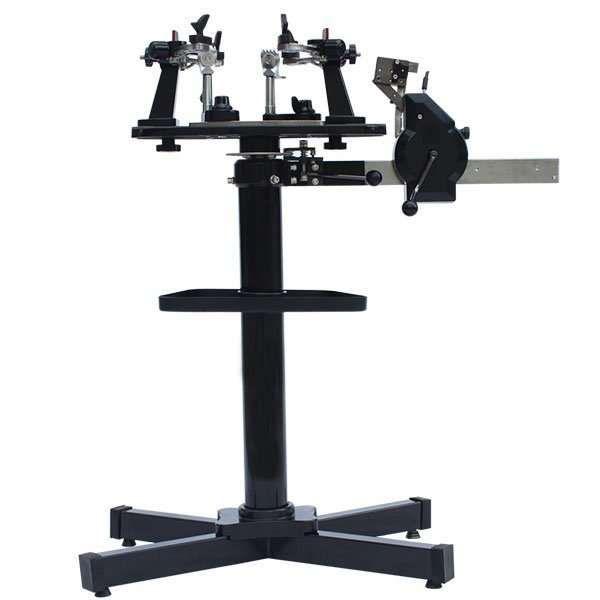
Badminton stringing at home in India: machine costs, tools and is it worth it?
Every badminton player who breaks strings often eventually has the same thought: I am paying ₹300 to ₹600 every few weeks, so why not buy a stringing machine? It is a reasonable question with an unforgiving answer, because the arithmetic in India works out very differently from what people assume.
Here is the honest maths, what a home stringing setup actually requires, and who should genuinely buy one.
What does badminton stringing cost in India?
Club-level restringing in Indian cities typically runs ₹250–₹500 for labour plus string, with premium strings and tournament-grade stringers pushing higher. The string itself is the cheap part: a set of Li-Ning No. 7 Badminton String is ₹399, and Victor VBS-70P E or VBS-70P C are ₹412 each.
So roughly half of what you pay a stringer is labour. That is the number a machine has to beat.
The machine cost is the whole problem
Badminton stringing machines in India span an enormous range. Cheap manual drop-weight units start around ₹2,000–₹4,000. Proper electronic constant-pull machines — the kind that actually hold tension reliably on a badminton frame — are a different category entirely: the Stringing Machine S218 is ₹84,999.
That gap matters more in badminton than in tennis. Badminton frames are thin, light and easy to distort. A cheap machine with poor frame support and inconsistent tension will, sooner or later, crack a racket. Doing that to a ₹7,000 frame erases several years of stringing savings in one afternoon.
| Scenario | Annual restrings | Paying a stringer | Break-even on an ₹85,000 machine |
|---|---|---|---|
| Casual player | 2–3 | ~₹1,200/yr labour | Never, realistically |
| Regular club player | 6–8 | ~₹3,000/yr labour | Roughly 28 years |
| Serious junior / tournament player | 15–20 | ~₹7,500/yr labour | Roughly 11 years |
| Coach or academy (10 rackets) | 100+ | ₹40,000+/yr labour | Around 2 years |
Read that table carefully. For an individual player, a proper machine essentially never pays for itself. For a coach, academy or club stringing for a group, it pays back quickly.
So who should actually buy a stringing machine?
- Academies and coaching centres. Ten or more rackets in rotation makes the economics obvious.
- Clubs with a member base. A machine plus one trained member becomes a service, and often a small revenue line.
- Players in towns with no good stringer. This is the underrated case. If your nearest reliable stringer is a three-hour trip, the value is convenience, not money.
- Anyone planning to string commercially. Then it is a business asset, and the maths is a different exercise entirely.
Notably absent from that list: the enthusiastic club player who breaks strings monthly. You are better off building a relationship with a good stringer and spending the money on frames and shoes.
If you do buy one: what else you need
The machine is not the whole setup.
- Awl, pliers, starting clamps and a grommet tool. Badminton frames need grommet replacement more often than players expect.
- Spare grommet strips. Stringing through a cracked grommet will cut the string within days.
- A tension calibrator. Machines drift. A machine you never calibrate gives you consistently wrong tension, which is worse than paying someone.
- Practice frames. Your first ten jobs will not be good. Do not learn on your match racket.
And learn what tension you actually want before you start experimenting — our guide on how many pounds is right is the place to start.
The cheaper upgrade most players should make instead
If the goal is better feel between restrings, grips do more for less. A fresh overgrip changes how a racket plays far more immediately than two extra pounds of tension. Yonex Tech-501B Badminton Overgrip is ₹100, the Yonex Aerocushion 9900 Badminton Grip ₹199, and the Yonex Super Grap AC102EX 5-pack ₹799 works out cheapest per grip.
And if your frame is old enough that string tension is no longer the limiting factor, that is a racket conversation: the Yonex Astrox 99 Play at ₹3,999, Yonex Astrox 100 VA Game at ₹6,999 or Yonex Nanoflare Nextage (unstrung) at ₹7,031 are the usual next steps.
Shop the gear
- Yonex Tech-501B Badminton Overgrip — ₹100
- Yonex Aerocushion 9900 Badminton Grip — ₹199
- Li-Ning No. 7 Badminton String — ₹399
- Victor VBS-70P E Badminton String — ₹412
- Yonex Super Grap AC102EX – Pack of 5 Grips — ₹799
- Yonex Astrox 99 Play Racket — ₹3,999
- Stringing Machine S218 — ₹84,999
Related reading
- Badminton Racket String Tension in India: How Many Pounds Is Right?
- Badminton String Guide: BG65 vs BG80 vs Aerosonic (India Buying Guide)
- Indoor Badminton Season 2026-27: Non-Marking Court Shoes Checklist
Frequently asked questions
Is it worth buying a badminton stringing machine for home use in India?
For an individual player, usually not. A proper electronic machine costs around 85,000 rupees while club restringing labour is roughly 250 to 500 rupees a time, so even a tournament player restringing twenty times a year would take over a decade to break even. It makes sense for academies, clubs and coaches stringing many rackets.
How much does badminton restringing cost in India?
Typically 250 to 500 rupees for labour plus the string, which is usually 400 rupees or so for a set. Premium strings and tournament-grade stringers cost more. Roughly half the total is labour, which is the only part a home machine saves.
Can a cheap stringing machine damage a badminton racket?
Yes. Badminton frames are thin and light, and cheap machines with poor frame support or inconsistent tension can distort or crack a frame. Damaging one mid-range racket can wipe out several years of stringing savings, which is why frame support matters more than headline price.


