
Cosco RX95 Air Rower Review & Buying Guide (India)
Air resistance, a full-body stroke and ₹53,499. A close look at the Cosco RX95 — and the two rowers you should compare it against before buying.
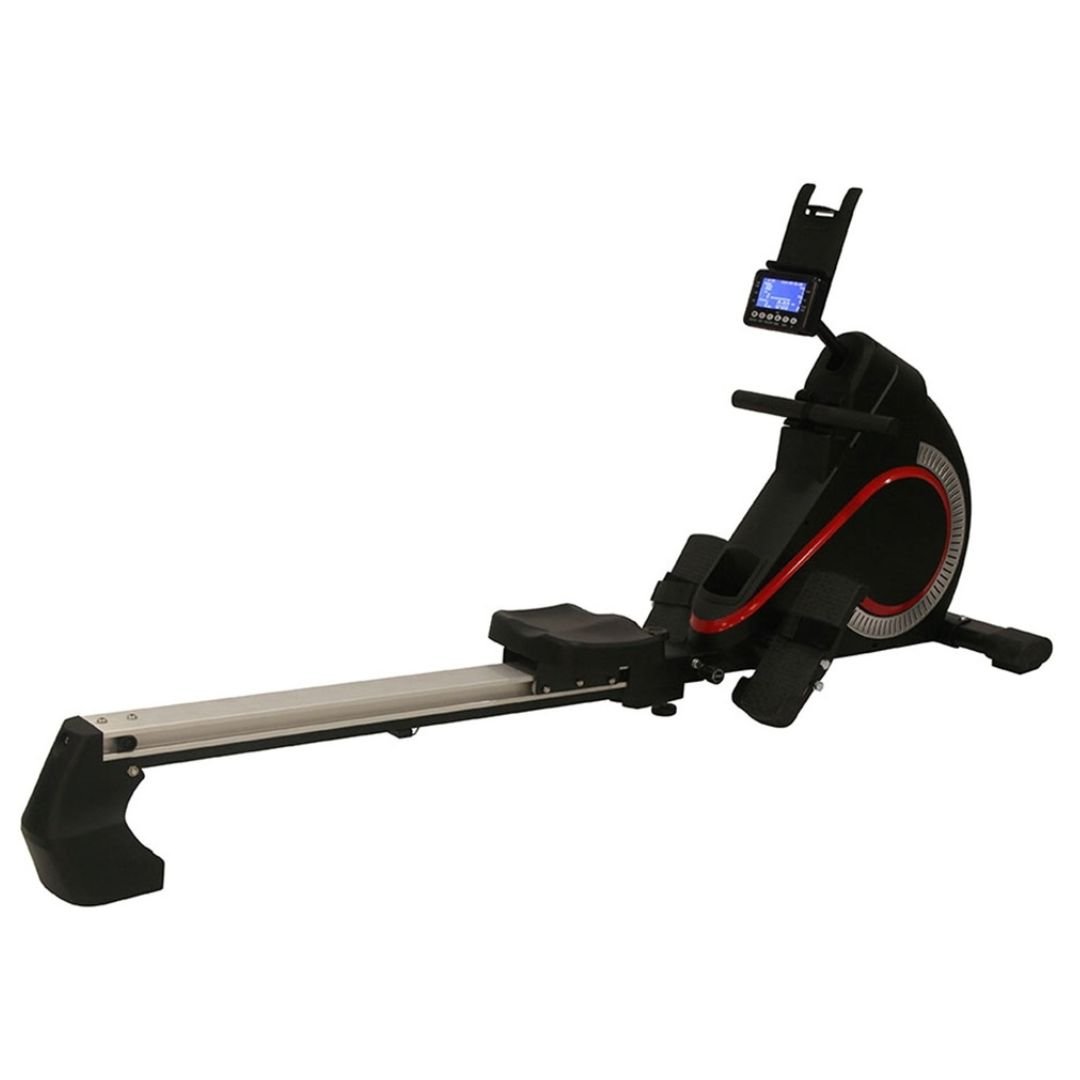
Cosco RX95 Air Rower: A Serious Home Rower at a Sane Indian Price
The Cosco RX95 Air Rower sits at ₹53,499 (down from a listed ₹67,000) and lands in an interesting spot in the Indian home-fitness market: it's an air rower — the resistance type that actual rowers and CrossFit gyms use — at a price that doesn't require the imported-equipment budget. Cosco is one of the few Indian fitness brands with genuine reach in service and spares, which matters more for a machine like this than the spec sheet suggests. Here's what the RX95 does, what it needs from your home, and how it compares to the obvious alternatives.
What is an air rower and how is it different?
An air rower creates resistance with a flywheel spinning against air. The consequence is the thing worth understanding: the resistance is proportional to your effort. Pull harder and the flywheel spins faster, meeting more air, giving you more resistance. Pull gently and it's gentle. There's no resistance dial to set, because your body sets it every stroke.
This is why air is the resistance type serious rowing uses. It self-scales — a 55kg beginner and a 95kg athlete can use the same machine at their own intensity without touching a setting. It also produces a stroke that genuinely resembles rowing on water, with the load building through the drive rather than being constant. The trade-off is noise: air rowers whoosh, audibly, and if you're in a flat with a sleeping child in the next room at 6am, that's a real consideration. Magnetic rowers are much quieter but feel dead by comparison.
- Air resistance: scales with your effort, no settings, most authentic stroke.
- Full-body: roughly 60% legs, 30% core and back, 10% arms — despite what the name implies.
- Low impact: no landing forces, which is why it suits knees that running has finished with.
- Noise: genuinely loud. Check your household before buying.
Who is the Cosco RX95 for?
Cosco pitches the RX95 at home users wanting smooth full-body workouts, and that's a fair description. The air resistance system creates the natural rowing movement, and the frame is built for long-term home use rather than the light-duty construction that gives out after eighteen months.
It suits three people particularly well. The runner with tired knees — rowing gives comparable cardiovascular work with no impact, which is why it's the standard cross-training answer after a running injury. The monsoon athlete — four months of Indian rain is exactly when a rower earns its floor space, and it's a far better indoor session than most alternatives. And the time-poor person — a rower is one machine that trains legs, back, core and cardio at once, which is a genuine efficiency if you have 30 minutes.
It suits one person badly: anyone who hasn't learned the stroke. Rowing is technique-dependent in a way a treadmill isn't. Done wrong — yanking with the arms, rounding the lower back — it's an efficient way to hurt your spine and get very little fitness for the effort. Spend the first two weeks at low intensity learning the sequence: legs, then back, then arms on the drive; arms, then back, then legs on the recovery. This is general fitness information, not medical advice — if you have existing back problems, get cleared before starting.
How does the Cosco RX95 compare to other rowers in India?
Three comparisons are worth making. The Cosco RX110 Air Rower at ₹93,499 is the step up in the same family — a heavier, more substantial build aimed at higher-usage settings. Whether that ₹40,000 is worth it depends entirely on whether the machine is serving one person or a household of four training daily. For most homes, it isn't.
The Commercial Air Rower VFAR-10 at ₹49,999 is the interesting one, because it's ₹3,500 cheaper than the RX95 and built to a commercial specification. If your priority is frame durability above all and you're comfortable with a less established support network, it's genuinely worth a look. The RX95's argument against it is Cosco's service and spares reach in India, which over a ten-year ownership is not a small thing.
And the outlier: the Concept2 USA – SkiErg- Indoor Nordic Ski Machine at ₹1,49,999 isn't a rower at all — it's Concept2's Nordic ski trainer, using the same air-resistance principle but training an upper-body-dominant pull. Mentioned because Concept2 is the name serious rowers ask about, and because if you're at this budget you're in a different conversation entirely.
| Machine | Price (₹) | Best for |
|---|---|---|
| Commercial Air Rower VFAR-10 | 49,999 | Frame durability, budget-first |
| Cosco RX95 Air Rower | 53,499 | Home use, Cosco service reach |
| Cosco RX110 Air Rower | 93,499 | Heavy household or semi-commercial use |
| Concept2 SkiErg | 1,49,999 | Upper-body pull, different sport |
Space, setup and the verdict
Before you buy, measure. A rower needs roughly 2.4m of length in use, plus room behind the seat for the recovery. Many rowers store upright against a wall — check this specifically for your unit, because a machine that has to stay flat in a 2-BHK is a machine that becomes a clothes rack. Give it a mat underneath: it protects your floor, and it cuts the vibration that your downstairs neighbour will otherwise become familiar with.
Verdict: at ₹53,499 down from ₹67,000, the Cosco RX95 is a reasonable buy for a household that wants one machine to cover cardio and strength-endurance with no impact, and that has the floor space and noise tolerance for an air rower. It is not the cheapest air rower on this list — the VFAR-10 undercuts it — and it's not the most machine, which is the RX110. What it is, is the balanced one, backed by the service network that matters when something needs a spare part in year four. Learn the stroke properly first, and it'll be the most-used piece of equipment you own.
Shop the gear
- Commercial Air Rower VFAR-10 — ₹49,999
- Cosco RX95 Air Rower — ₹53,499
- Cosco RX110 Air Rower — ₹93,499
- Concept2 USA – SkiErg- Indoor Nordic Ski Machine — ₹1,49,999
Related reading
- Monsoon Indoor Rowing in India: Why the Rainy Season Suits Rowing Machines
- Monsoon Indoor Cardio at Home: A Gear Guide for India
- Best Home Gym Equipment Under ₹10,000 in India
Frequently asked questions
What is an air rower and how is it different from a magnetic rower?
An air rower creates resistance with a flywheel spinning against air, so the resistance is proportional to your effort — pull harder and it pushes back harder, with no dial to set. This self-scaling is why serious rowing uses air, and it produces a stroke that resembles rowing on water. The trade-off is noise: air rowers are audibly loud, while magnetic rowers are much quieter but feel comparatively dead.
Is the Cosco RX95 Air Rower worth ₹53,499?
For a household wanting one machine to cover cardio and strength-endurance with no impact, yes — provided you have roughly 2.4m of floor length and tolerance for the noise. The Commercial Air Rower VFAR-10 undercuts it at ₹49,999 and the RX110 is more machine at ₹93,499. The RX95's argument is balance, plus Cosco's service and spares reach in India over a long ownership.
How much space does a rowing machine need at home in India?
Roughly 2.4 metres of length in use, plus clearance behind the seat for the recovery stroke. Check whether your specific unit stores upright against a wall — a rower that must stay flat in a 2-BHK tends to become a clothes rack. Use a mat underneath to protect the floor and cut vibration transmitted to neighbours below.


