Elliptical Stride Length and Flywheel Weight Explained: What to Check Before You Buy (India)
Stride length and flywheel weight decide how an elliptical feels. Here is how to read both numbers before you buy, with real examples and ₹ prices.
Elliptical stride length and flywheel weight: the two numbers that matter
Elliptical stride length and flywheel weight are the two specifications that most affect how a cross trainer feels, yet they are often buried below the list of programmes and screen features. Get them wrong and the machine feels choppy or cramped, and it ends up as a clothes stand. This guide explains what each number means and how to judge it, using machines listed on InstaSport from the Cosco CET-240ES at ₹21,999 to the NordicTrack SE3i at ₹69,999.
What is stride length on an elliptical?
Stride length is the distance between the front and back of the pedal's path, in other words how far your feet travel on each cycle. A short stride makes the motion feel like stepping up and down; a longer stride feels closer to walking or jogging. Compact home machines often sit around 13 to 16 inches (33 to 40 cm), mid-range models around 16 to 18 inches, and gym-style machines go to 18 to 20 inches and beyond.
What stride length do I need for my height?
As a rough guide, shorter users are usually comfortable on compact strides, while people around 5 ft 7 in and taller tend to prefer 18 inches or more. If several family members will use the machine, choose for the tallest regular user. The best test is still to try a machine: if your knees feel like they are coming up rather than moving forward, the stride is too short for you.
What does flywheel weight do?
The flywheel is the weighted disc that keeps the pedals moving between pushes. A heavier flywheel stores more momentum, so the motion feels smoother and more continuous, especially at higher resistance. A light flywheel can feel jerky, with a dead spot at the top and bottom of each stroke. Weight is not everything, though. Drive design, the belt and the quality of bearings matter too, so use flywheel weight as one clue, not the whole story.
How the numbers look on real machines
| Machine | Listed spec | Price |
|---|---|---|
| Cosco CET-E8M | 4 kg two-way flywheel | ₹29,999 |
| Cosco CET-240ES (with seat) | 8 kg two-way flywheel | ₹21,999 |
| Cosco Wave CET 850 ES | 8 kg flywheel, 400 mm stride | ₹43,840 |
| Cosco 170ER | 6 kg rear flywheel, 38 cm stride | ₹59,999 |
| Cosco EKX 6R | 460 mm stride, 24 resistance levels | ₹62,999 |
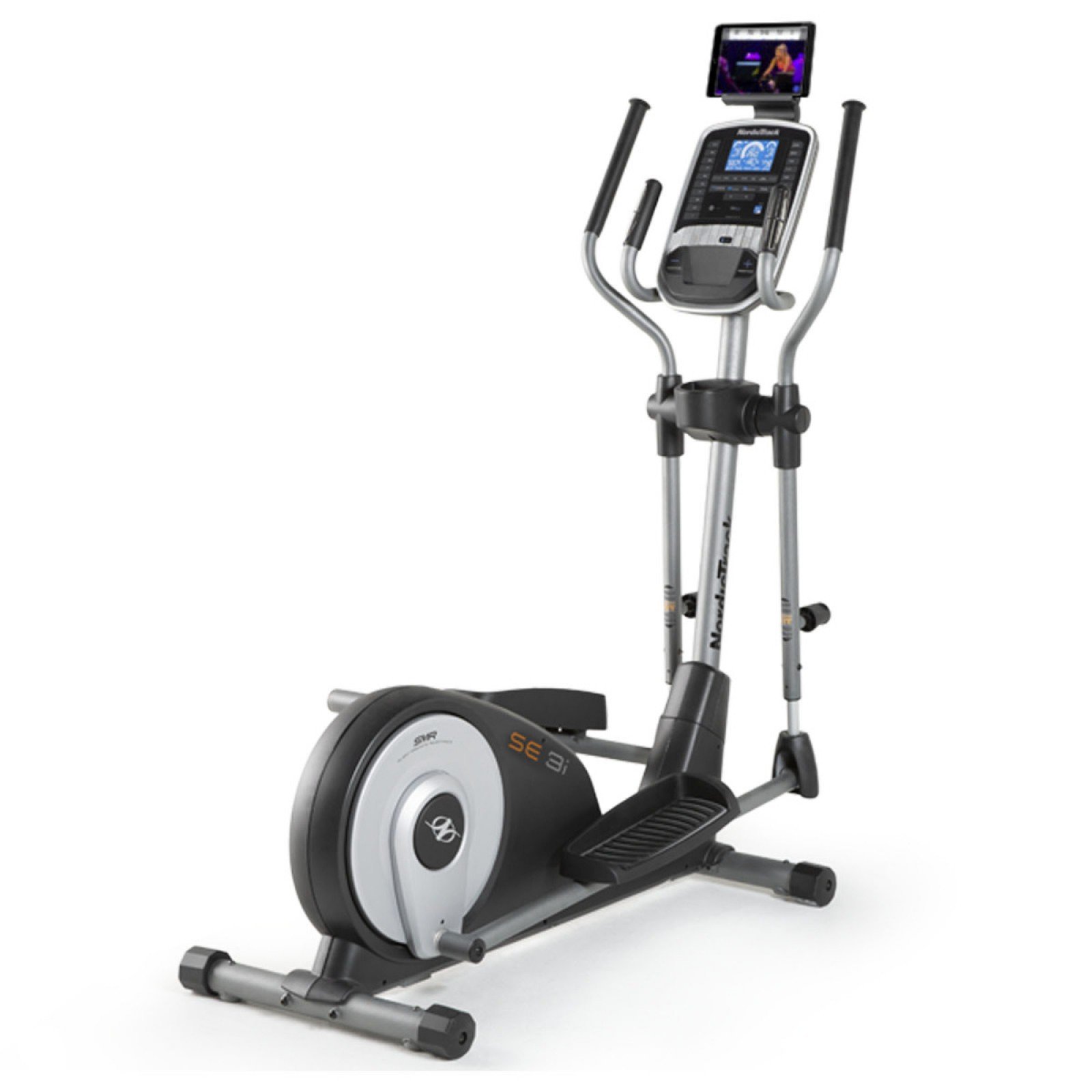
| NordicTrack SE3i | 14 kg flywheel, 22 resistance levels | ₹69,999 |
Specifications are taken from the product listings; confirm them on the product page before ordering.
Front drive vs rear drive
On a rear-drive elliptical the flywheel sits behind the pedals, which often gives a flatter, more walking-like path. Front-drive machines place it ahead of you and can feel slightly more like climbing. Neither is automatically better. Rear-drive designs tend to be longer, so measure your floor space, and allow extra ceiling height because the pedals lift you several inches.
Other things worth checking
- Maximum user weight: choose a machine rated comfortably above the heaviest user.
- Resistance type: magnetic resistance is quieter and needs less maintenance than friction systems.
- Pedal spacing: pedals set close together feel more natural on the hips.
- Footprint and wheels: check length, width and whether it can be moved.
- Service: ask about installation and warranty support in your city.
Which should you prioritise on a budget?
If you are of average height or shorter and want light to moderate cardio, an entry machine with a reasonable flywheel is fine. If you are tall, or plan to do longer, harder sessions, stride length is the one to protect; a cramped stride cannot be fixed later. Elliptical training is low-impact, but if you have a joint or heart condition, check with your doctor before starting. This is general guidance, not medical advice.
Shop the gear
- Cosco CET-240ES Elliptical Crosstrainer with Seat — ₹21,999
- Cosco CET-E8M Elliptical Crosstrainer — ₹29,999
- Cosco Elliptical Trainer Wave CET 850 ES — ₹43,840
- Cosco Elliptical Crosstrainer 170ER — ₹59,999
- Cosco Crosstrainer EKX 6R — ₹62,999
- NordicTrack SE3i Elliptical Cross Trainer — ₹69,999
Related reading
- Elliptical Cross Trainers Compared: Reebok A6.0, Cosco EKX 6R and NordicTrack SE3i (India)
- Treadmill vs Exercise Bike vs Elliptical: Which Home Cardio Machine to Buy? (India 2026)
- Wearables Top ACSM's 2027 Fitness Trends Again: What Indian Home Exercisers Should Actually Buy
Frequently asked questions
What is a good stride length for a home elliptical?
Many adults are comfortable with around 16 to 18 inches, while taller users often prefer 18 inches or more. Compact machines with shorter strides suit shorter users and lighter use.
Is a heavier flywheel better on an elliptical?
Generally a heavier flywheel gives a smoother, more continuous motion, but drive design and build quality matter as well.
Is 15 inches of stride enough?
It can be enough for shorter users and gentle workouts, but taller users may find it feels like stepping rather than striding.