
How to Choose Padel Shoes in India: A Buying Guide
Padel's artificial turf demands a specific sole. Why your tennis shoes won't do, what herringbone actually does, and what to buy in India.
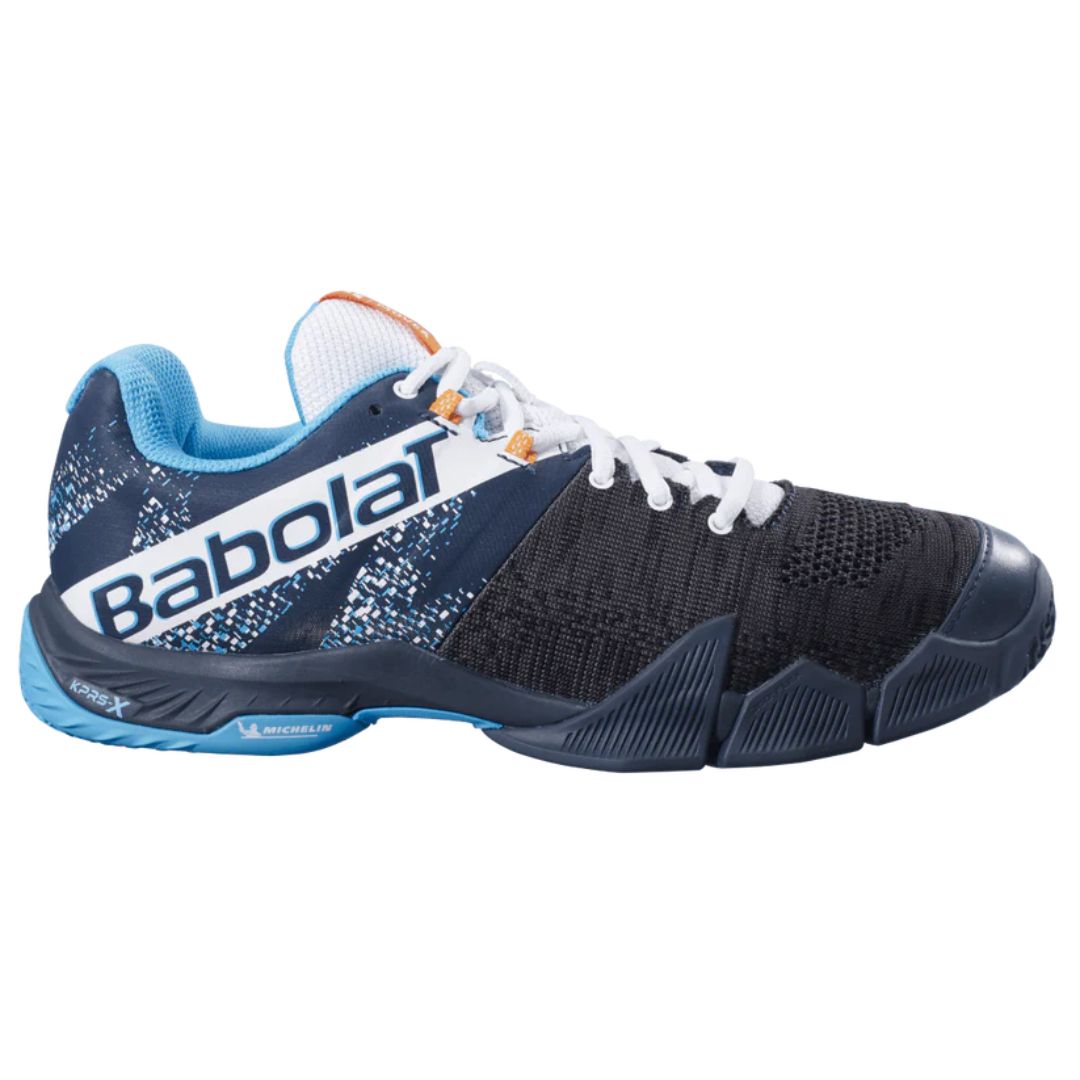
How to Choose Padel Shoes: The Sole Is the Whole Story
Working out how to choose padel shoes starts with understanding what you're playing on, because padel's surface is unlike anything else in racquet sport. Indian padel courts are artificial turf dressed with sand — a surface that behaves a bit like clay and nothing like a hard court. The sand moves under you. That single fact determines everything about the shoe, and it's why the running shoes in your bag are actively dangerous on a padel court and why even your tennis shoes are a compromise. With padel clubs multiplying across Mumbai, Bengaluru, Delhi NCR and Hyderabad, this is worth getting right before your first session, not after your first rolled ankle.
Can I use tennis or running shoes for padel?
Running shoes: no, and this isn't shop upselling. Running shoes are built for straight-line motion with a soft, high, cushioned midsole and essentially no lateral structure. Padel is the opposite sport — it's constant lateral movement, sharp direction changes and short slides. Put a running shoe on sanded turf and the foot rolls over the edge of the midsole. Ankle injuries in beginner padel are common and footwear is a large part of why.
Tennis shoes: better, and playable, but still a compromise. A hard-court tennis shoe has the lateral support you need, but its sole pattern is designed to grip a hard court. On sanded turf you don't want maximum grip — you want controlled slide. A hard-court sole tends to catch, stopping your foot while your body keeps going, which puts load through the knee. A clay-court tennis shoe is much closer to right, because clay tennis and padel share the controlled-slide requirement.
- Running shoes: no lateral support. Avoid entirely.
- Hard-court tennis shoes: playable, but the sole catches on sand.
- Clay-court tennis shoes: close, and a reasonable stand-in.
- Padel shoes: herringbone sole, reinforced lateral cage, built for the surface.
Herringbone, mixed and omni: what the sole patterns do
The herringbone pattern — that zig-zag chevron tread — is the standard for padel and clay, and it does two jobs at once. It bites enough to let you change direction, and it lets the sand shed out of the tread rather than packing in. That second part matters more than people realise: a sole that clogs with sand becomes a smooth plastic plate, and a smooth plastic plate on sanded turf is how people fall.
Mixed or hybrid patterns pair herringbone in the forefoot with a different tread at the heel, aiming for a bit more durability. Omni soles use a dense pattern of small studs, and they're the most aggressive option for turf. For most Indian club players on standard sanded courts, herringbone is the right answer and you don't need to overthink it.
Above the sole, look for a reinforced toe and a lateral cage. Padel's signature move — the slide into a wall-rebound — drags the outside edge of the shoe across the sand repeatedly, and an unreinforced upper wears through there first. Any shoe that lasts a season has visible reinforcement on the medial and lateral forefoot.
What are the best padel shoes for beginners in India?
Start at the accessible end; you'll learn what you want from your own game. The Asics Game FF Padel Shoes at ₹7,649 are the sensible entry — Asics' court lineage is excellent, the FF (FlyteFoam) midsole gives real cushioning without going soft and vague, and it's a shoe you can play a season in. The Babolat Movea Padel Shoes Men at ₹8,049 are the other obvious starting point; Babolat is a padel-native brand and the Movea is its most approachable model.
Moving up, the Asics Gel-Challenger 15 Padel Shoes at ₹8,499 add Gel cushioning and a more supportive upper — worth it if you're playing three or more times a week and your knees have opinions. The Babolat Jet Viva Men Padel Shoes at ₹8,799 sit at the lighter, faster end of the range; the Jet line is built around quickness rather than maximum cushioning, so it suits a player who likes to move.
| Shoe | Price (₹) | Best for |
|---|---|---|
| Asics Game FF | 7,649 | First padel shoe, balanced |
| Babolat Movea Men | 8,049 | Padel-native fit, beginners |
| Asics Gel-Challenger 15 | 8,499 | 3+ sessions a week, more cushion |
| Babolat Jet Viva Men | 8,799 | Fast, light, mobile players |
Fit, sizing and how long they last
Two fit rules specific to padel. First, go slightly snug in the midfoot — a shoe that lets your foot slide inside it during a lateral cut defeats the entire purpose of the lateral cage. Second, leave a thumb's width at the toe, because padel's constant stopping drives your foot forward, and a toe hitting the front of the shoe on every stop leads to bruised nails within weeks.
Try shoes on in the evening, when your feet have swollen slightly — that's closer to how they'll be mid-match than a morning fitting is. And if you're between sizes, take the larger and manage the volume with a slightly thicker sock rather than cramming into the smaller.
On lifespan: a padel shoe played twice a week on sanded turf will typically give you six to nine months before the herringbone rounds off. The tell is not that the sole looks worn — it's that you start sliding further than you meant to. When the slide gets unpredictable, replace them. A ₹7,649 shoe is cheaper than a knee.
Shop the gear
- Asics Game FF Padel Shoes — ₹7,649
- Babolat Movea Padel Shoes Men — ₹8,049
- Asics Gel-Challenger 15 Padel Shoes — ₹8,499
- Babolat Jet Viva Men Padel Shoes — ₹8,799
Related reading
- Babolat Movea Padel Shoes Review & Buying Guide (India)
- How to Choose a Padel Racket: A Beginner's Guide for India
- Best Padel Rackets for Beginners in India
Frequently asked questions
Can I use tennis or running shoes for padel?
Running shoes, no — they are built for straight-line motion with no lateral structure, and on sanded turf the foot rolls over the edge of the midsole. Hard-court tennis shoes are playable but their soles are designed to grip rather than slide, so they can catch on the sand and load the knee. Clay-court tennis shoes are the closest stand-in, because clay and padel share the controlled-slide requirement.
What sole should padel shoes have?
Herringbone — the zig-zag chevron pattern — is the standard for padel and clay. It bites enough for direction changes while letting sand shed out of the tread rather than packing in. A sole that clogs with sand becomes a smooth plate, which is how players fall. Omni soles with dense small studs are the more aggressive turf alternative.
How long do padel shoes last?
Typically six to nine months if you play twice a week on sanded turf. The signal to replace them is not visible sole wear but unpredictable sliding — when you start sliding further than you intended, the herringbone has rounded off and the shoe is no longer doing its job.


