
Indoor Rowing Machines Are Having a Moment in India (2026): Are They Worth It?
Rowers have quietly become the machine Indian home gyms argue about. Here is what the resistance types actually mean, what they cost, and the two situations where a rower is the wrong buy.
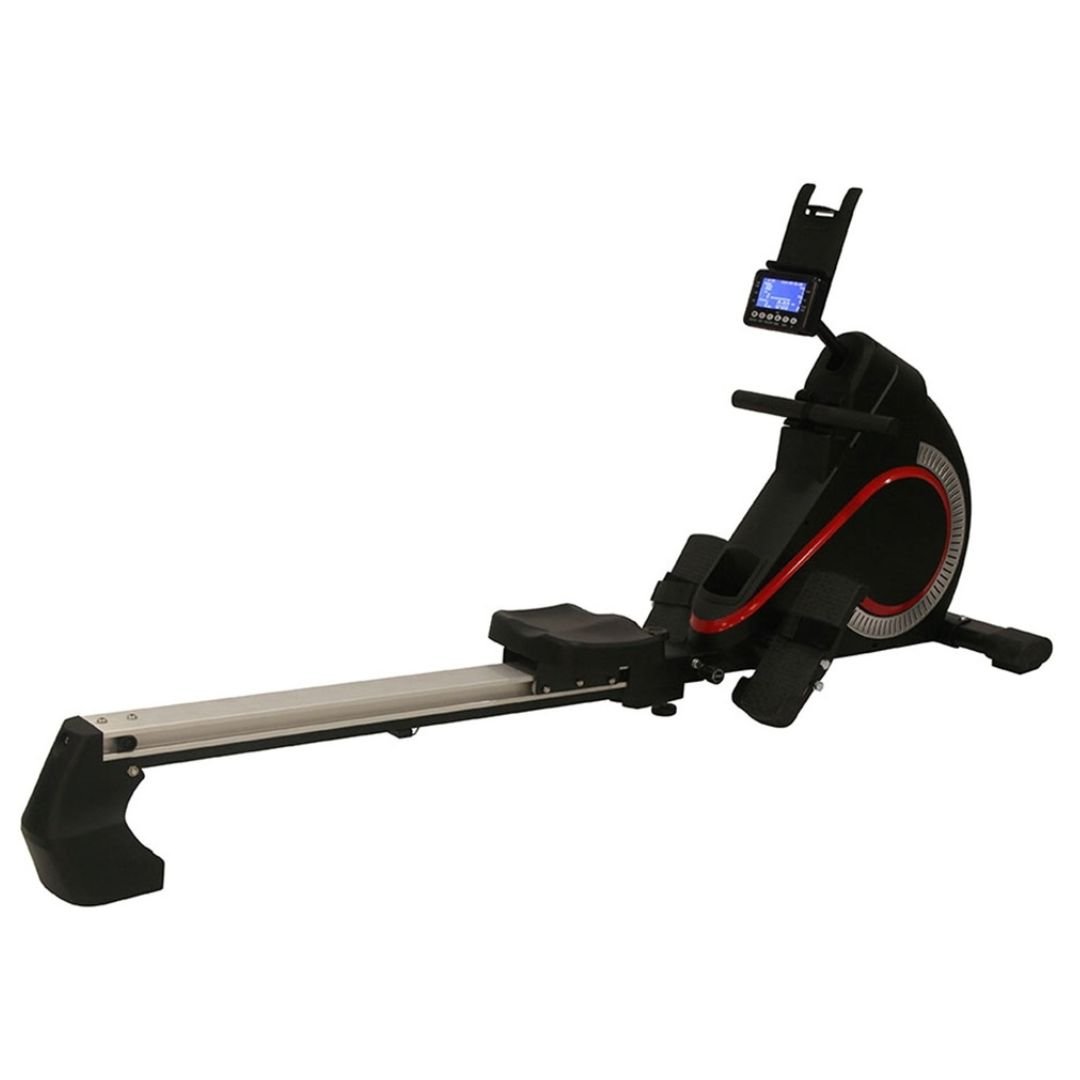
Why indoor rowing machines are booming in Indian home gyms in 2026
The indoor rowing machine has gone from a corner-of-the-gym curiosity to a genuine contender for the one cardio machine in an Indian apartment. Three things drove it: hybrid fitness racing put rowers in front of a much bigger audience, apartment gyms started stocking them, and buyers began noticing that a rower folds upright in a way a treadmill does not.
The appeal is legitimate. Rowing is low-impact, works roughly 85% of your muscle mass across legs, back and arms, and scales from easy to brutal without changing equipment. It is also the machine people most often buy and then abandon, because the technique is unforgiving and a bad rowing stroke is boring and sore in equal measure.
Air vs magnetic vs water rowers: which resistance type to buy
Resistance type is the main decision, and it drives noise, feel and price far more than brand does.
| Type | Feel | Noise | Best for |
|---|---|---|---|
| Air | Resistance rises with effort; most like real rowing | Loud whoosh on every stroke | Serious training, interval work, hybrid racing |
| Magnetic | Smooth, fixed per setting; less dynamic | Very quiet | Apartments, shared walls, early-morning sessions |
| Water | Realistic swoosh, heavier flywheel feel | Moderate, pleasant | People who want the feel and have the space |
For Indian flats the honest trade-off is noise versus fidelity. An air rower like the Cosco RX95 Air Rower at ₹53,499 gives you the training feel that competitive rowers and hybrid racers want, but it is audible through a wall at 5:30 am. A magnetic unit is the peacekeeper.
How much space does a rower really need?
Most full-size rowers are 210–240 cm long and 50–60 cm wide in use. You also need about 60 cm of clearance behind the seat rail for the handle return. So the working footprint is closer to 3 metres than 2. Many split or tilt upright to about 60 × 60 cm for storage, which is the feature to check before buying — a rower that cannot be stood up will live permanently in your living room.
What the monitor should show
Ignore calorie counters. The numbers that matter are split time per 500 m, stroke rate, and distance. A monitor that shows split is what makes structured training possible; without it you are guessing. Bluetooth to a phone app is useful but secondary.
Who should not buy a rowing machine
Two groups should look elsewhere. First, anyone whose main goal is simply to walk more — a treadmill or walking pad delivers that with zero technique barrier. The Viva T-147 DC Motorized Treadmill at ₹52,500 sits at almost the same price as a mid rower and asks nothing of you technically. Second, anyone with an unresolved lower-back problem: rowing loads the back in flexion when form breaks down, and form breaks down when you are tired. That is general information, not medical advice — check with a physiotherapist first if your back is a known issue.
If you want the upper-body-dominant version of the same idea, a ski ergometer like the Concept2 SkiErg at ₹1,49,999 is the premium alternative, and it takes up a fraction of the floor space because it mounts vertically.
Learn the stroke before you chase numbers
The sequence is legs, then back, then arms on the drive; arms, then back, then legs on the recovery. Roughly 60% of the power comes from the legs. Beginners reverse this — they yank with the arms, round the back and wonder why their shoulders ache. Spend the first two weeks at a low stroke rate (18–22 strokes per minute) building the sequence, then let the intensity come.
What a rower costs in India in 2026
- ₹20,000–₹40,000: light magnetic rowers, fine for steady cardio, flex in the rail under heavier users.
- ₹50,000–₹70,000: the sweet spot. Solid air or heavy magnetic units with a real monitor, like the Cosco RX95 at ₹53,499.
- ₹1,00,000+: commercial-grade ergs and specialist machines built for daily multi-user training.
Shop the gear
- Cosco RX95 Air Rower — ₹53,499
- Concept2 SkiErg Indoor Nordic Ski Machine — ₹1,49,999
- Viva T-147 DC Motorized Treadmill — ₹52,500
- Viva T-148 DC Motorized Treadmill — ₹55,312
Related reading
- Treadmill vs Exercise Bike vs Elliptical: Which Home Cardio Machine to Buy?
- NordicTrack RW900 Rowing Machine Review & Buying Guide (India)
- Compact Home Gym Setups Are Booming in India (2026)
Frequently asked questions
Is a rowing machine good for weight loss?
It burns well because it recruits legs, back and arms together, and it is low-impact so you can do it often. But weight loss is driven mainly by overall diet and total activity, not the machine. A rower you enjoy and use four times a week beats a treadmill that gathers dust.
Air rower or magnetic rower for an Indian apartment?
Magnetic, if noise is a concern — it is near-silent and neighbours will never hear it. Air, if you want the authentic rowing feel and progressive resistance for interval training, and you can live with a loud whoosh on every stroke.
How much space do I need for a rowing machine?
Plan for roughly 3 metres of length including handle clearance behind the seat, and about 1 metre of width. Check whether the model stands or folds upright for storage, which brings the parked footprint down to around 60 by 60 cm.


