Low-Impact Cardio Is Trending in India: Are Elliptical Cross Trainers Worth It?
Ellipticals promise running-level cardio without the joint load. Here's what to look for and what it costs in India.

Low-impact cardio is trending in India — are elliptical cross trainers worth it?
Low-impact cardio has become the fastest-growing category in Indian home fitness, and the elliptical cross trainer is the machine riding that wave. The reasoning is simple: a generation of desk workers in their thirties and forties wants the cardio benefit of running without the knee bill, and India's cities offer few running surfaces that are kind to joints. On an elliptical your feet never leave the pedals, so the impact spike that a running stride sends through the ankle, knee and hip simply does not happen.
The honest question is whether that justifies ₹50,000–₹85,000 of living-room floor space. Usually yes — with caveats.
What does an elliptical cross trainer actually do?
It reproduces a walking-to-running gait on a fixed elliptical path while the moving handlebars pull your upper body into the work. Because arms, core and legs all contribute, you cover more muscle mass per minute than on a stationary bike. Typical burn sits in the range of 270–400 calories per 30 minutes depending on body weight and resistance, roughly comparable to a brisk jog.
Who benefits most from low-impact cardio?
- Anyone with knee, hip or ankle pain, or a history of shin splints.
- Runners in an off-season or rehab block who need volume without pounding.
- People above roughly 90kg starting a fitness programme, where impact loads are highest.
- Apartment dwellers — an elliptical is far quieter through a floor slab than a treadmill.
This is general information, not medical advice. If you have an existing joint or cardiac condition, get clearance from your doctor first.
What to look for when buying an elliptical in India
| Spec | Why it matters | Aim for |
|---|---|---|
| Stride length | Too short feels like pedalling in a bucket | 16–20 inches |
| Flywheel weight | Drives smoothness at low resistance | 8kg+ |
| Drive position | Rear/front drive is more stable than centre on cheap units | Rear drive |
| Resistance | Magnetic is silent; motorised adds auto programs | Magnetic, 16+ levels |
| Incline | Shifts load between quads and glutes | Nice-to-have |
Which elliptical should you buy?
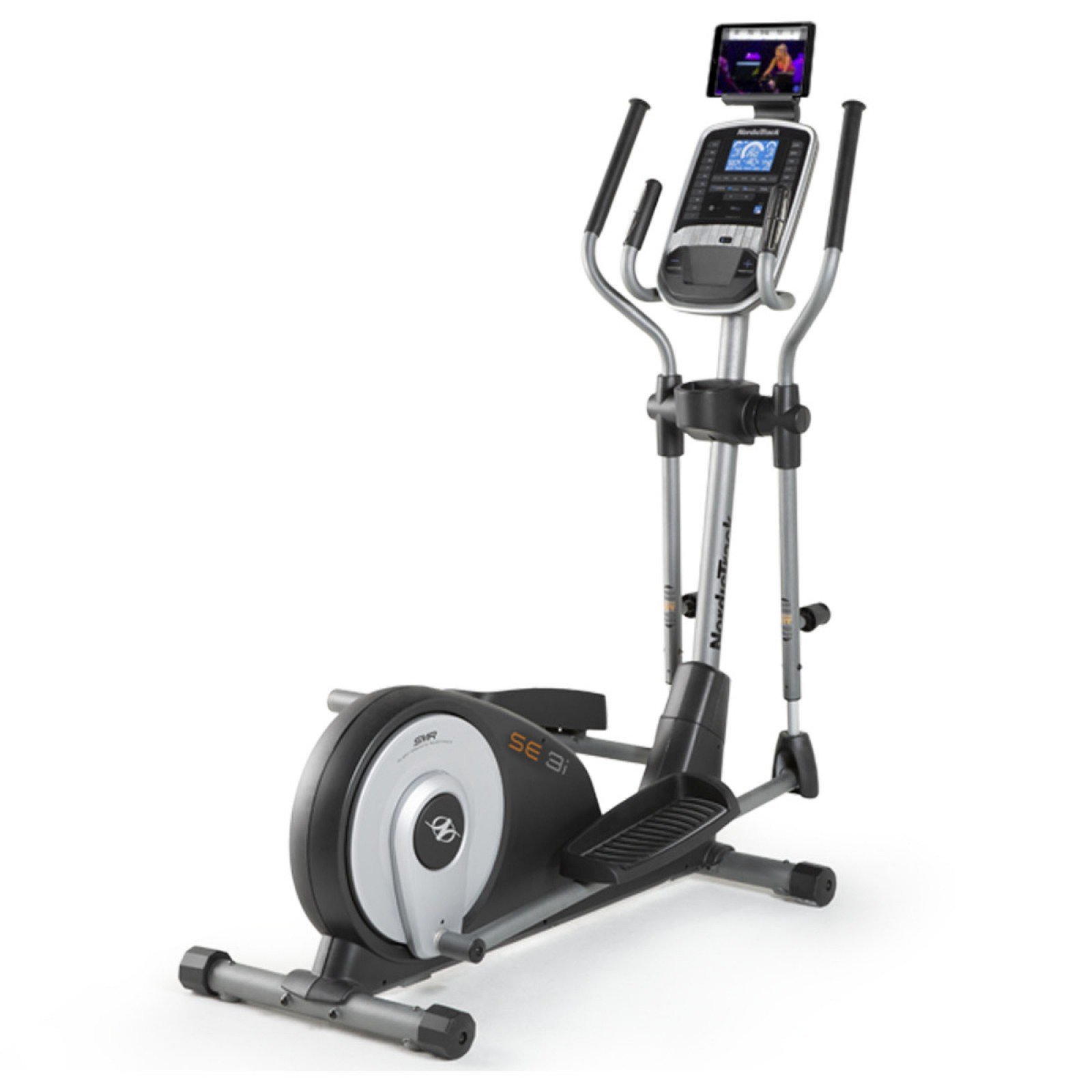
The Reebok A6.0 Elliptical (₹49,999) is the sensible starting point for home use — Bluetooth console, smooth magnetic resistance, and a stride that suits most Indian heights. The Cosco Crosstrainer EKX 6R (₹62,999) is a heavier, more planted machine for shared households. Step up to the NordicTrack SE3i (₹69,999) for programmed workouts, or the Adidas X-21 Cross Trainer (₹84,999) if you want near-commercial build.
Is an elliptical better than a treadmill?
For joints, yes. For bone density and running-specific fitness, no — impact is the stimulus that strengthens bone, and nothing prepares you for running like running. Many people own an elliptical and still walk outdoors, which is the right answer.
Shop the gear
- Reebok A6.0 Elliptical (Bluetooth Enabled) — ₹49,999
- Cosco Crosstrainer EKX 6R — ₹62,999
- NordicTrack USA SE3i Elliptical Cross Trainer — ₹69,999
- Adidas X-21 Cross Trainer — ₹84,999
Related reading
- Cosco Elliptical Trainer 28E Review & Buying Guide (India)
- Monsoon Indoor Cardio at Home: A Gear Guide for India
- The Home Gym Boom in India: How to Build a Setup That Lasts
Frequently asked questions
Are elliptical cross trainers worth the money?
If joint-friendly cardio is your priority, yes. Ellipticals deliver a full-body, low-impact workout of roughly 270–400 calories per 30 minutes with almost no impact load. Home models in India start around ₹49,999.
Is an elliptical good for knee pain?
It is one of the gentlest cardio machines because your feet stay on the pedals throughout. Anyone with existing knee problems should still get medical clearance before starting.
What stride length should I look for?
Sixteen to twenty inches suits most adults. Shorter strides feel cramped and encourage a choppy, unnatural gait.