
Multi-Gym vs Free Weights in India: Which Home Setup Actually Works?
Multi-gym or free weights? A practical comparison for Indian apartments — cost, floor area, noise, training alone and long-term progression — plus what to buy first.
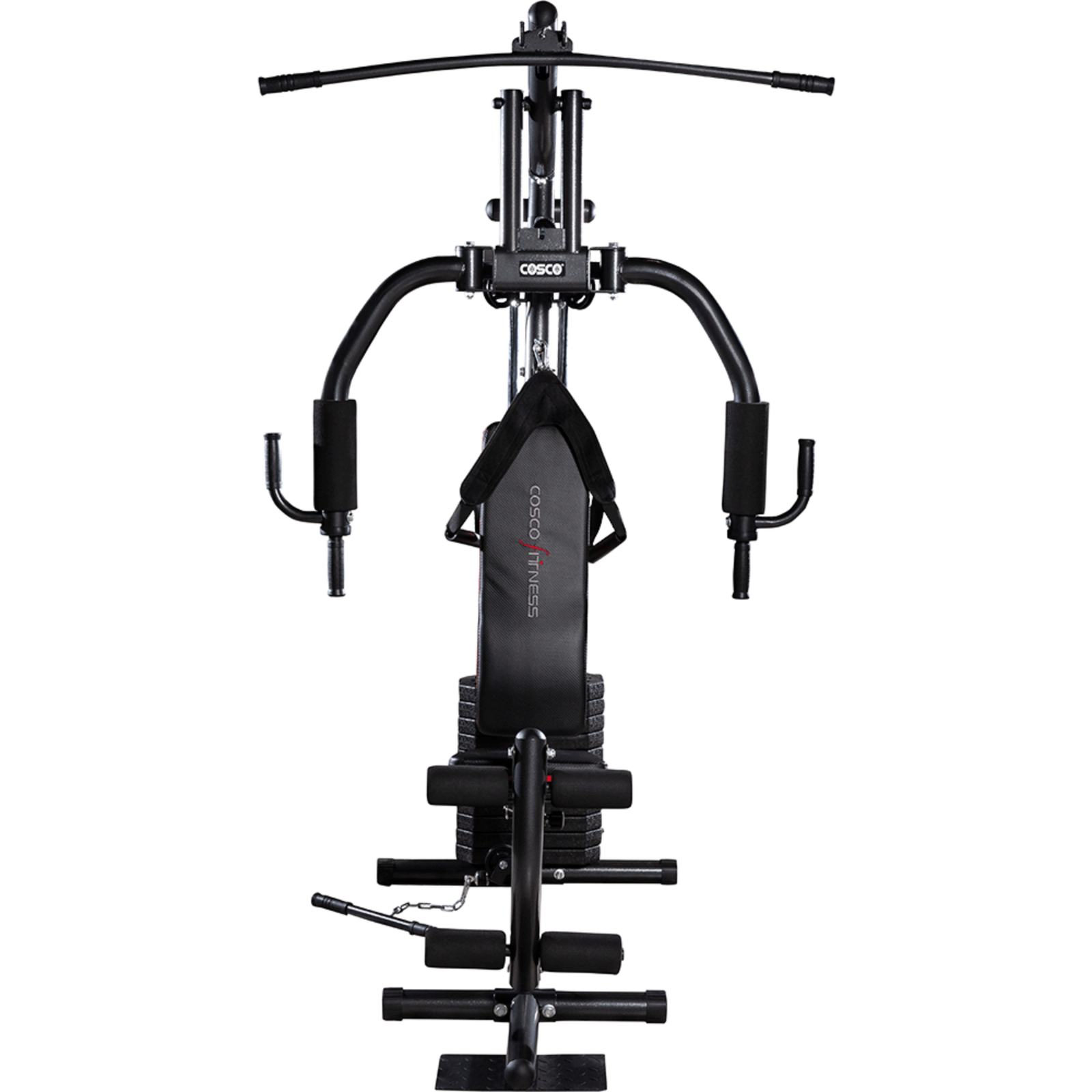
Multi-gym vs free weights: which home setup actually works in an Indian flat?
If you are building a home gym in India, the first real decision is not the brand — it is whether to buy a multi-gym (a stack-loaded machine with cables and pulleys) or free weights (barbell, dumbbells, bench). They cost roughly the same at entry level, they occupy roughly the same floor area, and they produce very different training experiences. Getting this call right saves you ₹30,000 and a lot of regret.
Here is the honest comparison, framed for Indian apartments: limited floor space, shared walls, and often no lift access for a 100 kg delivery.
What is a multi-gym, and what does it actually do well?
A multi-gym is a single frame with a weight stack, cables, pulleys and fixed stations — usually a lat pulldown, a chest press, a low row and a leg extension. You select load with a pin, sit down, and pull or push along a guided path.
- Safety. No barbell can fall on you. If you train alone, at night, without a spotter, this matters more than gym-bro forums admit.
- Zero setup time. Pin in, sit, go. That friction reduction is why people who own multi-gyms often train more consistently than people who own barbells.
- Quiet. A weight stack landing softly beats a 60 kg barbell dropping on a second-floor slab. Your neighbours will notice the difference.
- Beginner-proof. The guided path means bad technique is far less punishing.
The trade-off: fixed paths mean less stabiliser recruitment, and the top end of most home stacks (around 70–90 kg) becomes limiting within a year or two for pressing and rowing.
What free weights do better
- Progression has no ceiling. Add plates forever. A stack runs out.
- Better carryover to sport. Squats, deadlifts, presses and rows load the whole kinetic chain, including the stabilisers a machine takes over for you.
- Cheaper per kilo. Plates and a bar cost far less than an equivalent stack.
- Modular. A bench plus adjustable dumbbells fits in a corner and can be added to piece by piece.
The trade-off: you need a rack or a spotter for heavy work, you need to learn technique properly, and dropped weights are loud and floor-damaging.
Multi-gym vs free weights: a straight comparison
| Multi-gym | Free weights | |
|---|---|---|
| Entry cost | ₹30,000–₹70,000 | ₹7,000 bench + plates, scalable |
| Floor area | Fixed footprint, roughly 5x4 ft plus clearance | Flexible, can be stored away |
| Training alone | Very safe | Needs a rack with safeties |
| Noise | Low | Moderate to high |
| Long-term ceiling | Limited by stack weight | Effectively unlimited |
| Learning curve | Minimal | Real — invest in coaching |
Which should you buy? Pick by who you are
Buy a multi-gym if…
You train alone, you are a beginner or returning after a long break, you want general fitness rather than strength records, or you share a building where noise is a live issue. The Adidas Essential Home Gym ADBE-10460 at ₹29,999 is a compact starting point, and the Cosco Home Gym CHG-160R at ₹34,999 adds more stations for family use. If several people at home will use it daily and you want commercial-grade build, the Cosco Multi-Gym CHG03 at ₹67,499 is the step up.
Buy free weights if…
You want to get measurably stronger, you play a sport, or you already know how to squat and press. Start with a proper adjustable bench — the Multi Adjustable Bench With Leg Curl / Extension Attachment at ₹6,999 covers flat, incline and decline plus leg work — then add dumbbells or a bar and plates as you progress.
The setup most people should actually build
A hybrid. An adjustable bench and a pair of dumbbells cover 80% of a good programme for under ₹20,000 in most cases. Add a multi-gym later if you find yourself skipping sessions because setup feels like effort, or a rack and barbell if you find the stack too light. Buying the bench first is the low-regret move either way.
Before you order: three checks
- Measure the ceiling. Lat pulldown stations and overhead pressing need real headroom. Indian flats with false ceilings often have less than you think.
- Check delivery access. Multi-gym cartons are heavy and long. Confirm lift dimensions or ground-floor access before ordering.
- Protect the floor. Rubber mats under either setup protect tiles, cut noise and stop a machine walking across the room.
This is general fitness information, not medical advice. If you are returning from injury, get cleared before starting a loading programme.
Shop the gear
- Multi Adjustable Bench With Leg Curl / Extension Attachment — ₹6,999
- Adidas Essential Home Gym ADBE-10460 — ₹29,999
- Cosco Home Gym CHG-160R — ₹34,999
- Cosco Multi-Gym CHG03 — ₹67,499
Related reading
- How to Choose a Multi-Gym for Home Workouts in India
- How to Choose a Squat Rack for Your Home Gym in India
- Best Home Gym Equipment Under ₹10,000 in India
Frequently asked questions
Is a multi-gym as good as free weights?
For general fitness and beginners, a multi-gym delivers similar results with far less technique risk. For maximum strength and sport carryover, free weights are better because the load has no ceiling and stabilising muscles work harder.
How much space does a home multi-gym need in India?
Plan for roughly a 5x4 ft footprint plus about two feet of clearance on the working sides, and check ceiling height — lat pulldown and overhead stations need headroom that many Indian flats with false ceilings do not have.
What should I buy first for a home gym?
An adjustable bench. It is inexpensive, stores easily, and works with dumbbells now and a barbell later, so it stays useful whichever direction your training goes.


