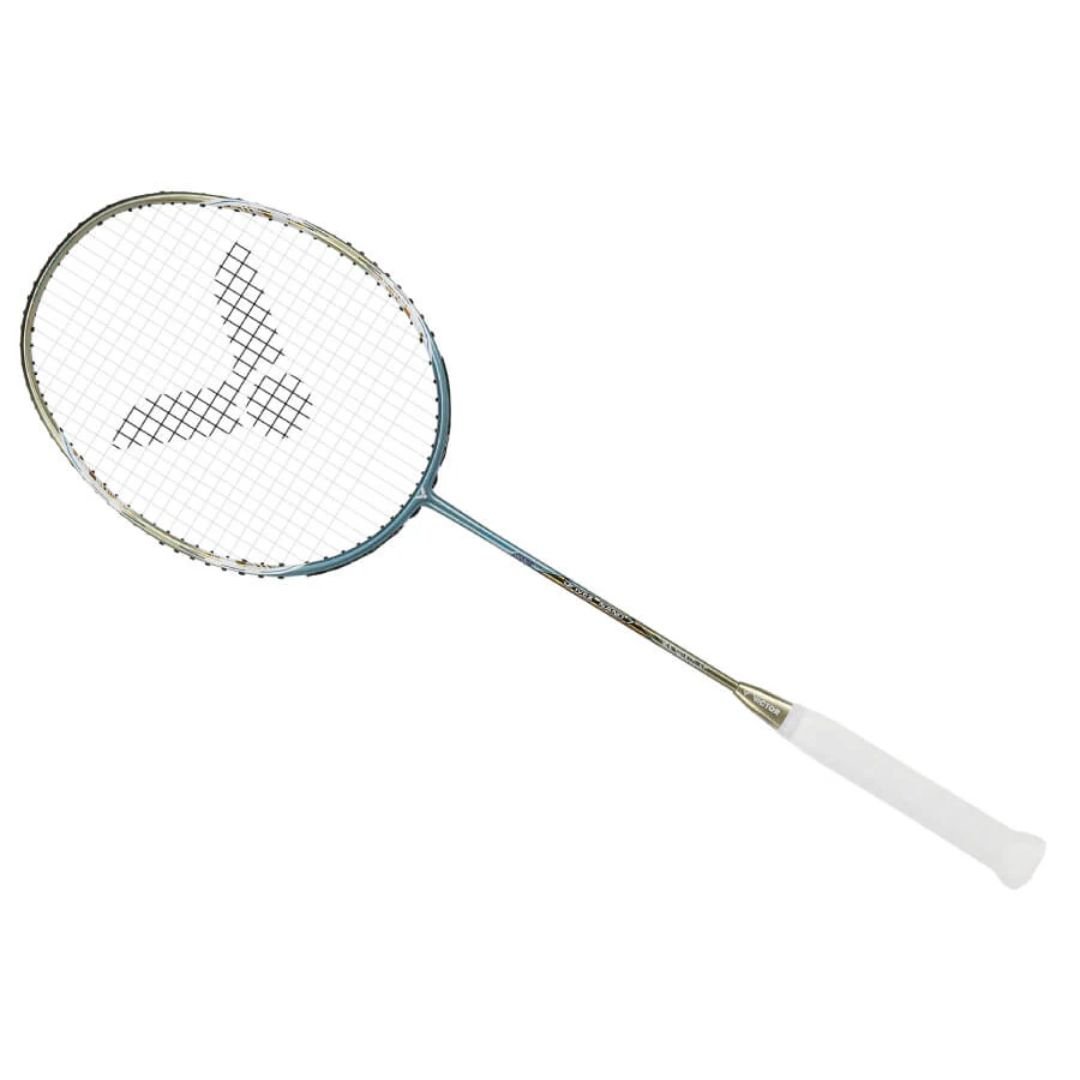
How to Choose a Badminton Racket: A Complete Beginner's Guide (India)
A beginner's guide to choosing a badminton racket in India — weight, balance, shaft flex, tension and grip size, with budget picks.

How to choose a badminton racket: a complete beginner's guide (India)
Learning how to choose a badminton racket comes down to four things: weight, balance, shaft flexibility and grip size. Get those right and the racket disappears in your hand so you can focus on technique; get them wrong and you'll fight the racket every rally. This beginner's guide breaks down each factor for Indian players and points you to a few sensible first rackets, whether you play twice a week at a society court or you're just starting out.
Racket weight explained: what do 3U, 4U and 5U mean?
Badminton racket weight is written as a "U" number — the higher the number, the lighter the frame. 4U (80–84g) is the most recommended weight for beginners because it is light enough to swing for long sessions without tiring your arm, yet has enough mass to generate power. 5U (75–79g) is even lighter and easier to control, ideal for juniors and smaller players, while 3U (85–89g) suits players who want more stability once technique improves. A light, forgiving frame like the Yonex Astrox 01 Feel Badminton Racket (₹2,000) is an easy first choice.
Balance point: why even-balance is best for beginners
Balance describes where the racket's weight sits — head-heavy for power, head-light for speed, or even-balance in between. For beginners, an even-balance racket is the smart pick because it works for both singles and doubles while you discover your style. The budget-friendly Cosco CB-885 Badminton Racket (₹414) is a fine knock-about frame for absolute first-timers before you invest more.
Shaft flexibility and string tension
A flexible or medium shaft is best for beginners: it flexes and "kicks" the shuttle for you, so you get power without perfect timing. Stiff shafts reward fast, developed swings and can feel dead in a new player's hands. On string tension, start low — around 20–22 lbs — for a larger sweet spot and more forgiveness. You can move to higher tension for control later. A quality string like Li-Ning No. 7 Badminton String (₹399) is a reliable all-rounder.
Grip size and overgrips
Most Indian adults suit a G4–G5 grip; when in doubt, size down and build up with an overgrip, which is cheaper to replace as it wears. A cushioned overgrip such as the Yonex Aerocushion 9900 Badminton Grip (₹199) improves comfort and absorbs sweat during humid Indian summers.
How much should a beginner spend on a badminton racket?
You don't need to spend big to start well. A dependable beginner racket in the ₹1,500–₹2,500 range gives you a properly balanced, correctly weighted frame that will see you through months of learning — spending more mainly buys stiffer shafts and materials that reward advanced technique you haven't built yet. Absolute first-timers who just want to knock the shuttle around can begin with an entry racket under ₹500 and upgrade once they're hooked. A common mistake is buying an expensive, stiff, head-heavy "pro" racket too early: it looks the part but makes learning harder and can strain the shoulder. Spend the saved money on shuttlecocks, a decent pair of non-marking court shoes and a few coaching sessions instead — they'll improve your game far more than an extra ₹3,000 on the frame. As your strokes and fitness develop, you'll also have a much clearer sense of whether you prefer speed or power, which makes your second racket a far smarter purchase.
Shop the gear
- Yonex Astrox 01 Feel Badminton Racket — ₹2,000
- Cosco CB-885 Badminton Racket — ₹414
- Li-Ning No. 7 Badminton String — ₹399
- Yonex Aerocushion 9900 Badminton Grip — ₹199
Related reading
- 3U vs 4U vs 5U Badminton Rackets: Which Weight Should You Buy? (India)
- Badminton String Tension Explained: A Buying Guide for India
- How to Choose Badminton Shoes: Sole, Cushioning and Fit
Frequently asked questions
What weight badminton racket is best for beginners?
A 4U racket (80–84g) is the best all-round starting weight — light enough to play long sessions without arm fatigue, but with enough mass for power. Juniors and smaller players may prefer an even lighter 5U frame.
Should a beginner use an even-balance or head-heavy racket?
Even-balance is best for beginners because it suits both singles and doubles and doesn't force a particular style. Head-heavy rackets add power but are harder to swing quickly, while head-light frames favour fast net play.
What string tension should a beginner start with?
Start around 20–22 lbs. Lower tension gives a bigger sweet spot and more forgiveness on off-centre hits, which helps while you build consistency. Move to higher tension only once you want more control and can hit the middle reliably.