
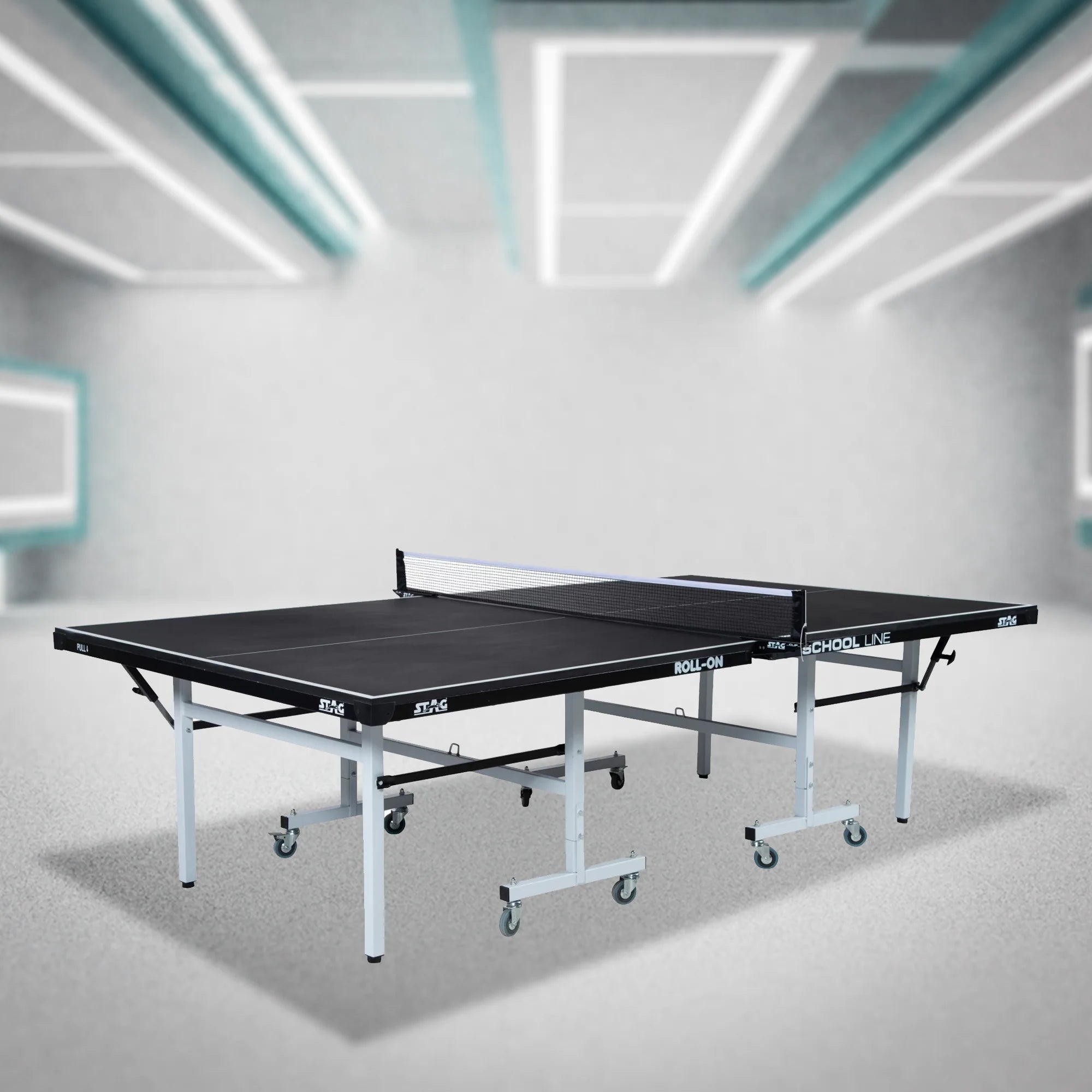
Introduction to Table Tennis
Table Tennis, often known as ping pong, is not just a sport; it is a remarkable game that has traversed the globe, transcending cultures and eras. Its popularity stretches across various age groups and continues to forge lasting impacts in both recreational and competitive spheres.
Historical Overview
The history of table tennis dates back to the late 19th century when it emerged as a parlor game in England. Initially coined 'Whiff-Whaff' or 'Ping Pong,' the game was played by the upper classes as a post-dinner entertainment using makeshift equipment.
By the 1920s, the sport began to formalize, marking the establishment of the International Table Tennis Federation (ITTF) in 1926. The ITTF remains the official governing body worldwide, cementing table tennis's place in competitive sports. Table tennis made its Olympic debut at the 1988 Seoul Games, further amplifying its global appeal.
Evolution of Equipment
The transformations in equipment have played a significant role in the sport's development. Initially played with simple wooden paddles and solid rubber balls, innovations over time have dramatically changed the dynamics of the game.
Paddles now feature layers of sponge and rubber, offering players greater control, spin, and speed. Ball technology has also progressed, with the shift from celluloid to safer, more durable poly-plastic materials.
The Legacy of the Game
Table tennis carries a rich legacy of fostering international camaraderie, perhaps best epitomized by the 'Ping Pong Diplomacy' of the 1970s. This unprecedented sports event facilitated thawing relations between the United States and China, proving sport's power as a diplomatic tool.
The legacy extends to the present day, where nations vie for dominance. Countries such as China and Japan have become powerhouses, consistently producing world champions who have left indelible marks on the sport's history.
Host Countries and Dominance
The table below offers a comparative glance at the dominant countries in the world of table tennis.
| Country | Notable Achievements | Legacy Players |
|---|---|---|
| China | 30+ Olympic gold medals | Ma Long, Deng Yaping |
| Japan | Frequent world championship contenders | Ai Fukuhara, Tomokazu Harimoto |
| Germany | Strong history in European competitions | Timo Boll, Dimitrij Ovtcharov |
| Sweden | Dominant in the 1980s and 1990s | Jan-Ove Waldner, Jörgen Persson |
Rules and Norms
The ITTF dictates the rules, including the necessity for matches to be played on a rectangular table, 2.74 meters in length and 1.525 meters in width, with a net in the middle. Points are scored when a player's opponent fails to return the ball correctly, and matches are usually best of five or seven games.
Key Techniques and Tactical Evolution
Prominent techniques, such as topspin and backspin, are crucial for gaining a competitive edge. Players like Ma Long and Jan-Ove Waldner have significantly influenced the tactical evolution of the game, incorporating a blend of agility, foresight, and precision into their gameplay.
The sport continues to evolve tactically, with a growing emphasis on agility training, psychological fortitude, and precision equipment adjustments to maximize performance.
Conclusion
Table tennis has woven itself into the fabric of sports heritage, symbolizing the blend of history and modernity. The game's rich legacy and continuing evolution mark it as a sport that cherishes its past while innovating for the future. As it stands today, table tennis remains a beacon of athleticism, global unity, and historical significance.
















































































































Share:
Beginner Masterclass: A Comparison Guide to Mastering Nutrition for Athletes
Understanding the Buying Psychology Behind Fitness Products