
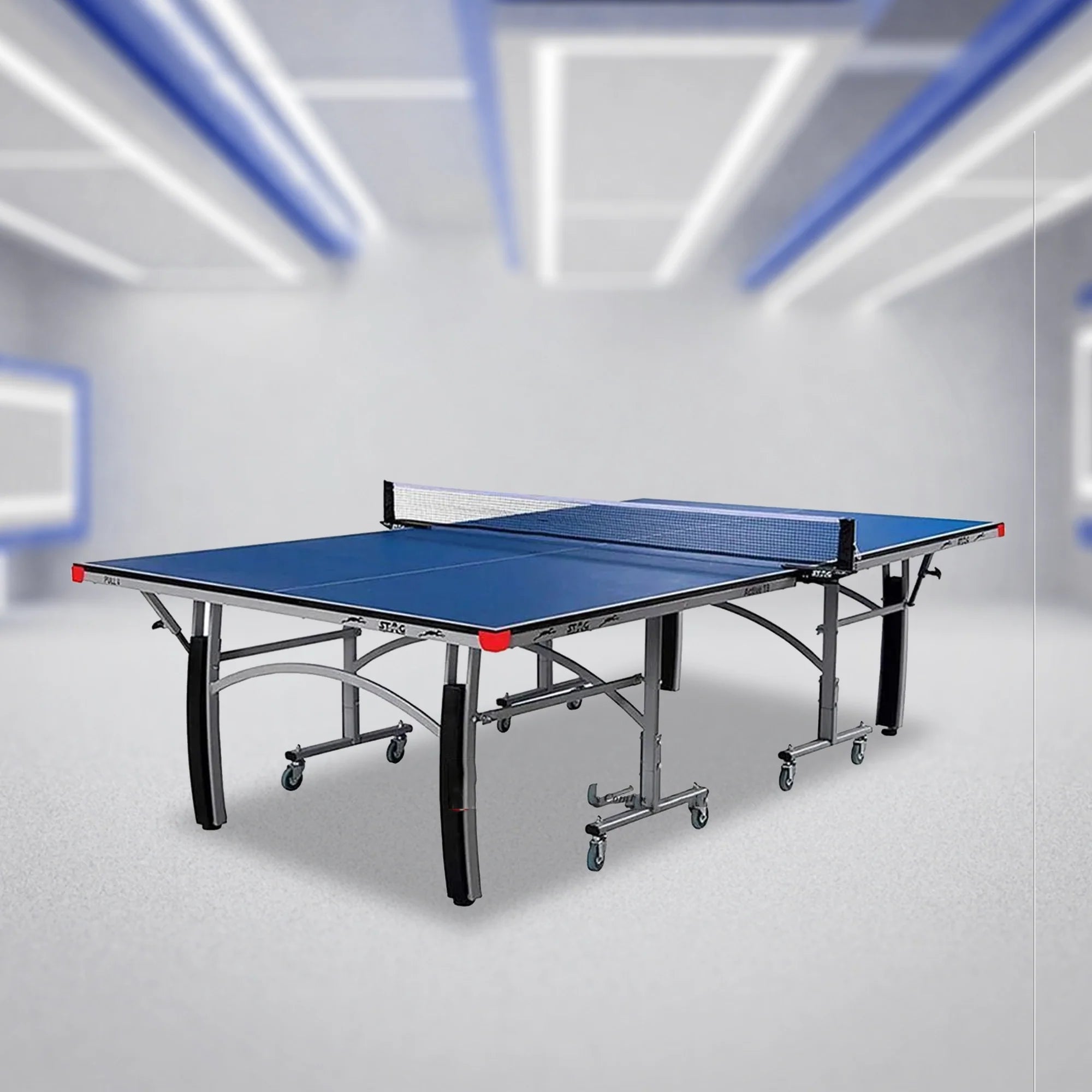
Introduction to Table Tennis
Often perceived as a recreational pastime, Table Tennis is a sport defined by its rapid pace and precision. Understanding the technical science behind it can elevate a player’s game, transcending social play to competitive prowess. This guide delves into the technical underpinnings and the scientific aspects that govern the sport, from equipment choice to physiological demands.
The Physics of Table Tennis
At its core, Table Tennis is a demonstration of physics principles at play. Whether it’s understanding spin dynamics or mastering the energy transfer between paddle and ball, players who comprehend these elements often have the competitive edge.
Table Tennis Equipment: A Technical Breakdown
Several components define the technical landscape of Table Tennis: the table, the paddle, and the ball. Each of these plays a crucial role in the stability and dynamics of the game.
| Component | Technical Aspect | Key Features |
|---|---|---|
| Paddle | Material & Coating | Carbon fiber for speed, tacky rubber for spin |
| Ball | Diameter & Weight | 40mm for stability, 2.7g for perfect bounce |
| Table | Surface & Net | 1 inch thick for true bounce, 6-inch net height |
Spin Dynamics: The Science Behind the Game
Spin is perhaps the most defining characteristic of high-level Table Tennis. A player's ability to generate and counteract spin effectively can be the difference between winning and losing. Spin affects the trajectory and bounce of the ball and comes in various forms, including topspin, backspin, and sidespin.
Generating and Counteracting Spin
- Topspin: Achieved by brushing the ball upward. This spin causes the ball to dip sharply, making it harder for opponents to counter.
- Backspin: Created by slicing downwards, leading to a slower ball with more control, often causing the ball to float.
- Sidespin: Produced by brushing the side of the ball, which makes it curve and is especially effective in service.
Biomechanics in Table Tennis
The biomechanics of Table Tennis reveal how players can utilize their bodies optimally to perform strokes efficiently. Key elements include grip technique, stance, and movement, all contributing to stroke efficiency and injury prevention.
Stroke Mechanics
Every stroke in Table Tennis, whether a forehand smash or a backhand flick, combines kinetics and kinematics:
- Forehand Smash: Maximize power through the kinetic chain—optimally timing shoulder rotation, elbow extension, and wrist snap.
- Backhand Flick: Utilize swift wrist action and correct timing to impart speed and spin.
Performance and Physiology
Table Tennis demands agility, reflexes, and cardiovascular endurance. An athlete's ability to maintain posture and execute quick directional changes requires an understanding of muscle coordination and energy systems, such as ATP-PC and glycogen pathways.
Training Regimens
Incorporating interval training and specialized drills can enhance agility and reflexes. Focusing on cardiovascular and strength training further fortifies an athlete’s performance by supporting recovery and extending competitive endurance.
Conclusion: Harnessing the Science for Success
While talent and practice are critical, understanding the scientific dimensions of Table Tennis amplifies one's potential to excel. By leveraging knowledge of physics, biomechanics, and physiology, any player can transform their approach and performance in this esteemed sport.




























































































Share:
Fueling the Machine: A Pro-Athlete's Guide to Mastering Nutrition
The Evolution and Legacy of Fitness: A Historical and Analytical Perspective